Cable deployment bow

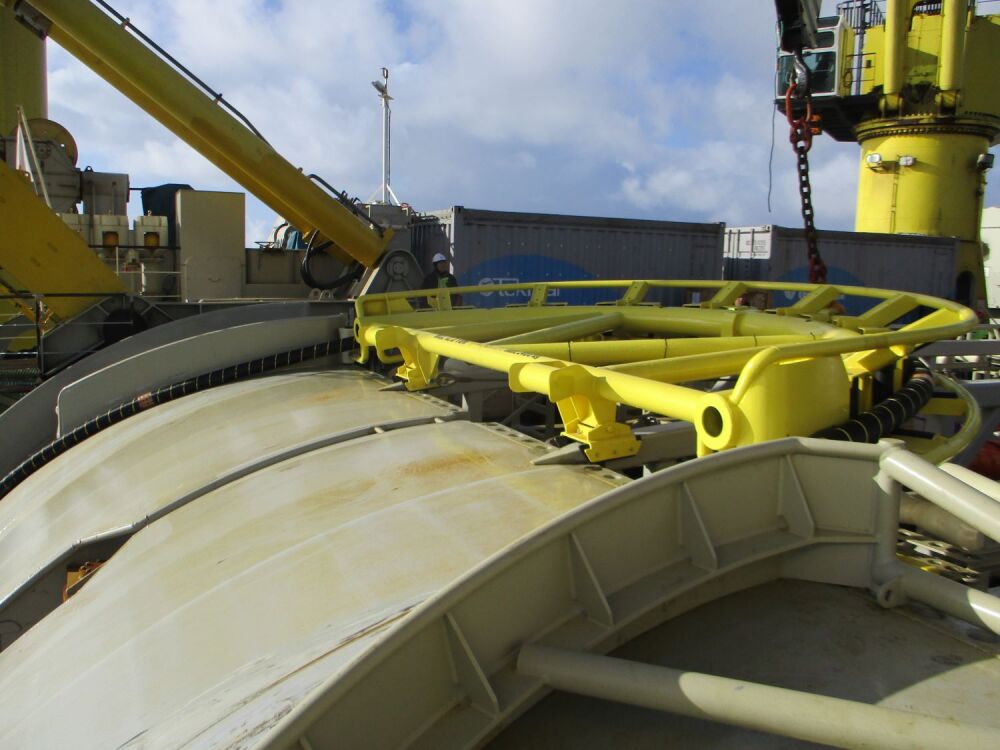
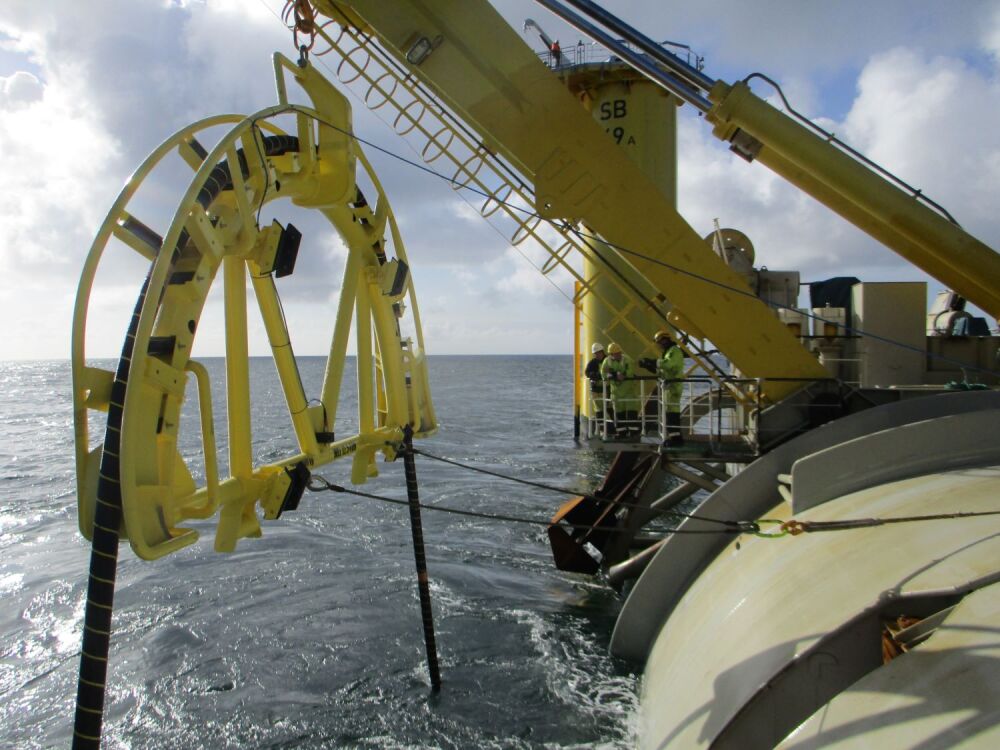
The electric power produced by offshore wind turbine generators (WTG) needs to find it’s way to the main land through electric power cables, connecting the WTG to the offshore substation (OSS) and the OSS to the main land. These thick and heavy cables are transported close to the structures by means of an installation vessel. By diverting an extra length of cable over a cable deployment bow, also called a quadrant, the vessel can maintain a safe distance to the connection point, thus preventing accidental damage.

The challenge: keeping vessel and structure apart

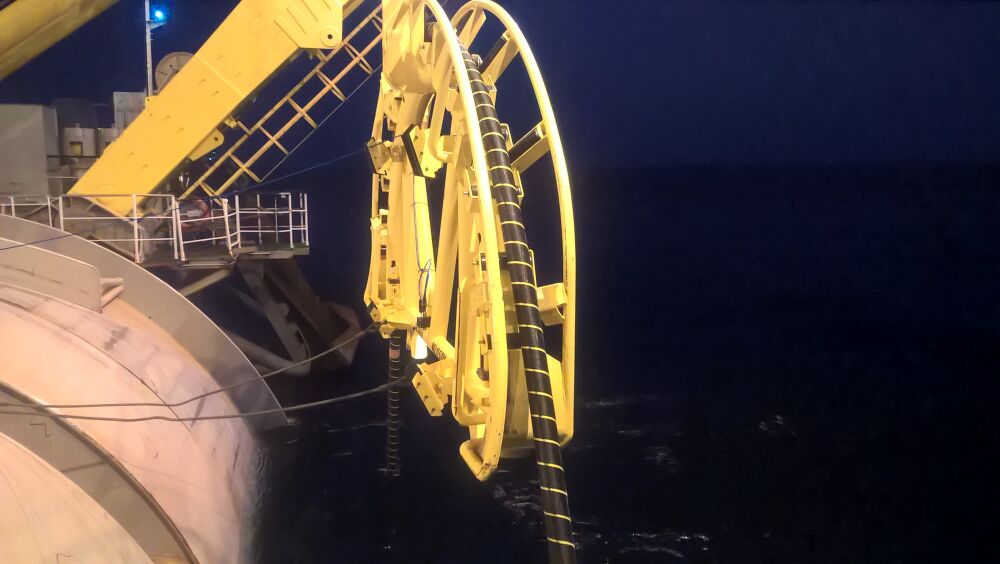
In offshore wind projects, heavy power cables connect wind turbine generators to offshore substations and from there to the mainland. These cables are expensive, sensitive to bending loads, and central to the operation of the entire installation. The problem with standard deployment methods is straightforward: the installation vessel ends up too close to the structure. That increases collision risk and raises the chance of damaging both the cable and the asset it is connecting to. A cable deployment bow solves this by creating distance where none would otherwise exist. It enables the overboard deployment of a cable loop without the cable exceeding its allowed bending radius.

What a cable deployment bow does

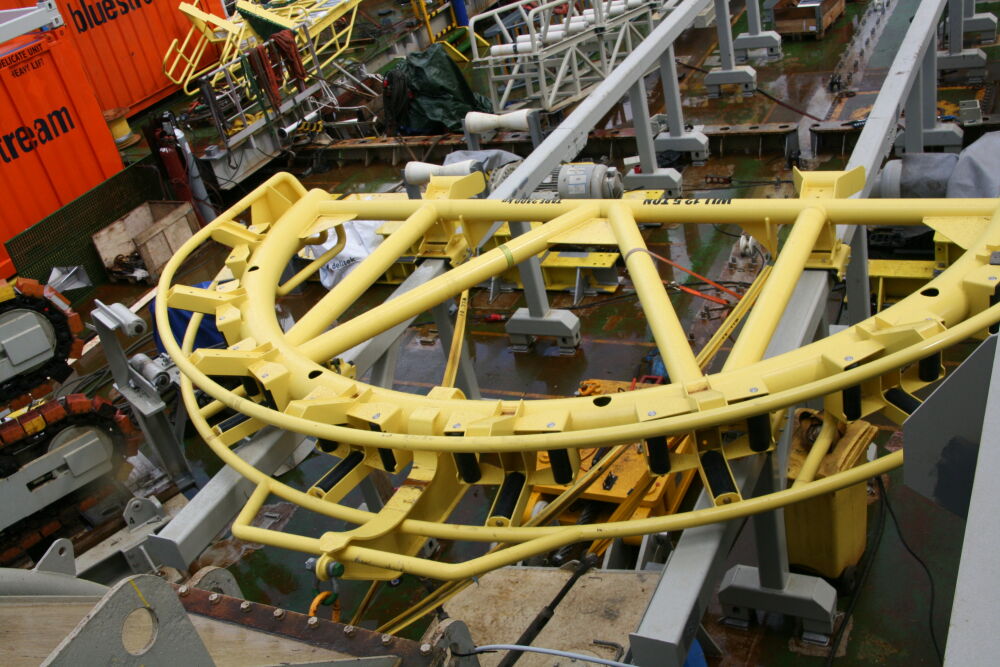
A cable deployment bow is a custom-built guiding structure that diverts an additional length of cable, allowing the installation vessel to maintain a safe stand-off distance from the connection point. The bow supports the cable at a calculated radius, preventing the sharp bends that compromise cable integrity. The result: the cable reaches its destination without accidental contact, without overbending, and with full compliance to project and class requirements.
Tillen approaches cable deployment systems

Tillen designs and builds cable deployment bows for offshore installation projects. Our scope covers the full engineering trajectory: from initial concept and structural analysis to shop drawings, fabrication management and certification for offshore use.

Each solution is built around the specific conditions of the project. That includes dynamic offshore loading, practical mobilization requirements, and efficient transport configurations.

The engineering is not adapted from a standard product. It is developed specifically for the client and project requirements. 

🔸 Full engineering scope from concept to fabrication
🔸 Structural analysis tailored to offshore dynamic loading
🔸 Fit-for-purpose design — not a modified standard product
🔸Practical mobilisation and transport considered from day one

Cable Deployment Bow

Related projects

  • Transition Piece Lifting Tool: SAL Developed for offshore wind installation campaigns where transition pieces require controlled, accurate positioning under dynamic conditions. Tillen handled the full scope: mechanical design, structural verification, load distribution optimization, fabrication supervision and proof load testing — certified to DNV-ST-N001 and EN 13155. View project →
  • Hub Rotating Tool (HRT): Designed to manage unbalanced wind turbine hubs using crane capacity for controlled rotation, reducing risk during blade installation. View project →
  • Container-Based Crane: Deck-mounted on standard containers, this system improves lifting height and access in space-constrained offshore environments without consuming additional deck footprint. View project →

Working on a cable installation project?

Tillen develops cable handling equipment for offshore projects where standard solutions fall short. If you have a deployment challenge, we are glad to look at it with you.

Leave us a message

Do you want to get in touch? Fill out the form below, and we will get back to you as soon as possible.